It’s range day. You pack your guns, grab a couple boxes of ammo, and head out. You hang your favorite target, step into your lane, and get to work. You shoot some random round counts at random targets. Maybe you throw in a few manipulations here and there.
But when you’re done, it feels exactly like the last time. Your shooting doesn’t feel any better. If anything, today might’ve felt a little worse.
If you’ve ever walked off the range thinking, “Why am I not getting better at shooting?” you’re not alone.
Plateaus are extremely common in skill-based disciplines like shooting. The frustrating part is that most shooters assume the answer is simple: “I just need to shoot more.”
More ammo.
More range time.
More reps.
But progress doesn’t come from volume alone. It comes from structured, measurable, and intentional practice.
If you feel stuck, it’s probably not because you lack talent. It’s because something in your training process is missing.
If that sounds familiar, here are a few reasons why you might not be progressing — and what to do about it.
- You’re Not Structuring Your Range or Dry Fire Time
If you want to get good at something, you need structure.
If you were trying to get stronger, you wouldn’t walk into the gym and do a bunch of random exercises with no plan. The same mindset applies to shooting. Too often, people go to the range, burn through a few boxes of ammo, and leave without being able to clearly say what they worked on.
Or they try to work on everything at once — which is almost as unproductive as working on nothing specific.
Before you head to the range (or start dry fire), set a plan.
Is your recoil management inconsistent? Then run drills that isolate grip and recoil control.
Are your reloads slow? Isolate reload reps.
Struggling with accuracy at speed? Work a specific cadence drill.
Track repetitions and sets like you would any exercise in the gym.
Every round on the live range should have a purpose.
Every minute in dry fire should have intent.
- You Don’t Have a Baseline or Real Standards
How do you know if you’re improving if you’ve never measured yourself?
Maybe you have progressed — you just don’t remember where you started.
Invest in a shot timer. At the very least, use a shot timer app. Pick a drill or standard and run it cold. A cold start means no warm-up, no dry fire beforehand. It’s the most honest snapshot of your current ability.
Record:
- Your time
- Your accuracy
- The conditions (distance, target, concealment or not, etc.)
Run that same test periodically under the same conditions.
Here are a few examples of benchmark drills you can use to track progress:
- Bill Drill – 7 yards
Six rounds as fast as possible into an A-zone sized target. This drill measures recoil control, grip consistency, and your ability to track sights at speed. It can be performed from the holster or from the low ready if you’re not yet comfortable drawing at speed. Track your total time, split times, and your hit quality.
- 1 Shot, Reload, 1 Shot
Fire one round, perform a reload, and fire one more round. This drill exposes inefficiencies in your draw, reload mechanics, and return-to-sight picture. Run it from the holster or low ready and record both your overall time and split time. Clean mechanics matter more than pure speed at first.
- Mozambique Drill (Failure to Stop) – 7 yards
Two rounds to the body zone followed by one round to a head box. This drill forces a transition from rapid cadence shooting to a more precise shot under time pressure. It highlights target transitions, visual patience, and trigger control when precision matters.
When running benchmark drills, consistency is key. Use the same distance, the same target size, and similar conditions each time. If you change variables every session, your data becomes meaningless.
If your time gets faster without sacrificing accuracy, you’ve improved.
If your accuracy improves while time stays similar, that’s progress too.
Standards create accountability. Without them, improvement becomes guesswork.
- You’re Skipping Dry Fire Between Range Sessions
Even if you can get to the range multiple times per week, you should still be dry firing.
Think of dry fire as the real practice. Live fire is confirmation.
Dry fire is free. It doesn’t require much time. It can be done at home. And you can isolate fundamentals without recoil masking your mistakes.
Grip.
Trigger press.
Sight tracking.
Draw stroke.
Reload mechanics.
You can refine all of these at home.
It doesn’t have to be complicated. Ten to fifteen minutes a day goes a long way if it’s intentional, but if you want to see large amounts of progress in a shorter period of time shoot for at least 30 minutes a day.
Just do it safely:
- Double and triple check that your firearm is unloaded and clear
- Remove all ammunition from the room
- Use a safe wall or designated backstop
There are also tools that can help — from simple wall targets to dry fire systems like the Mantis system. Weighted snap caps can even be used to mimic the weight of a loaded firearm.
- You’re Not Watching Yourself
You might feel like your draw is smooth and efficient — but the timer says otherwise.
That’s your cue to record yourself.
Film your reps. If possible, record in slow motion. Then play it back and dissect every movement.
You will almost always find wasted motion you didn’t feel in real time:
- Extra steps in your draw
- Unnecessary grip adjustments
- Sloppy reload indexing
- Inconsistent support-hand placement
The camera doesn’t lie.
Being able to objectively watch yourself is an incredibly valuable tool.
- You’re Not Taking Training Classes
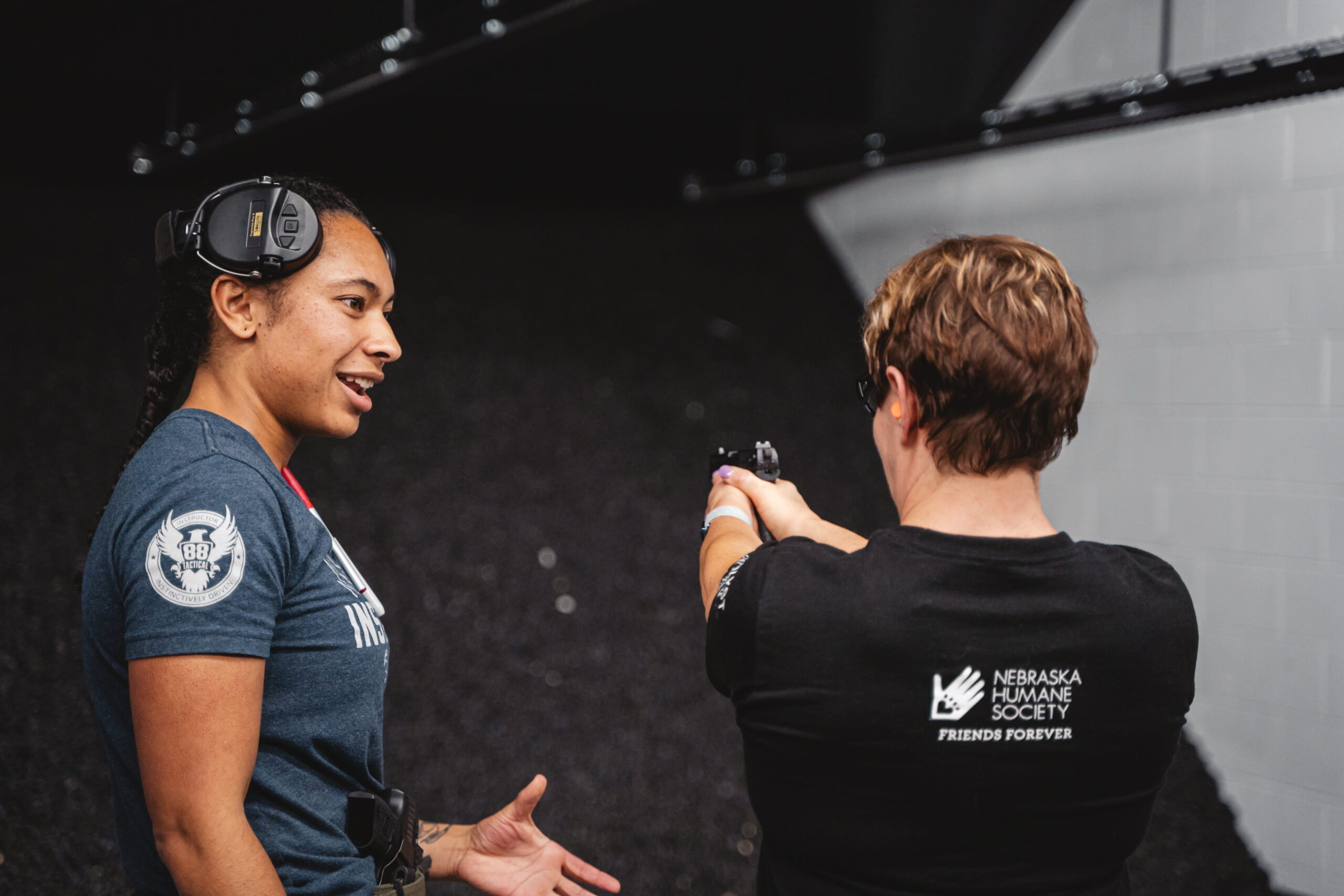
One of the fastest ways to improve is to learn from someone more experienced.
Left to your own devices, you’ll usually practice the things you enjoy — not necessarily the things you need.
A reputable instructor can:
- Expose blind spots
- Identify inefficiencies
- Introduce new concepts and drills
- Correct small errors before they become habits
Sometimes all it takes is one small correction from an experienced set of eyes to unlock major improvement.
Training also pushes you outside your comfort zone.
- You’re Always Shooting Inside Your Comfort Zone
Improvement requires controlled stress.
If you always shoot at distances, you’re comfortable with…
If you always shoot slow enough to guarantee hits…
If you avoid drills that expose weaknesses…
You’ll stay exactly where you are.
Progress happens at the edge of your ability.
This doesn’t mean being reckless. It means occasionally pushing:
• Slightly faster than comfortable
• Slightly farther than comfortable
• Slightly smaller targets than comfortable
Skill grows when you demand more from yourself.
Final Thoughts
If you feel stuck, it’s probably not because you “can’t get better.” It’s usually because your practice lacks structure, standards, or feedback.
Be intentional.
Track your performance.
Dry fire consistently.
Watch yourself.
Seek outside instruction.
Push outside your comfort zone.
At 88 Tactical, we believe that everyone deserves access to top-notch training experiences, personalized attention, and an inclusive environment that fosters growth and confidence. Whether you choose private individual training or opt for the camaraderie of private group training, we are dedicated to empowering you on your skill development journey.
