Everyday carry (EDC) isn’t about gear — it’s about preparedness. Whether your knife is primarily a tool, an emergency option during a violent encounter, or part of a broader personal-protection mindset, selecting the right one requires more than just browsing cool blades online.
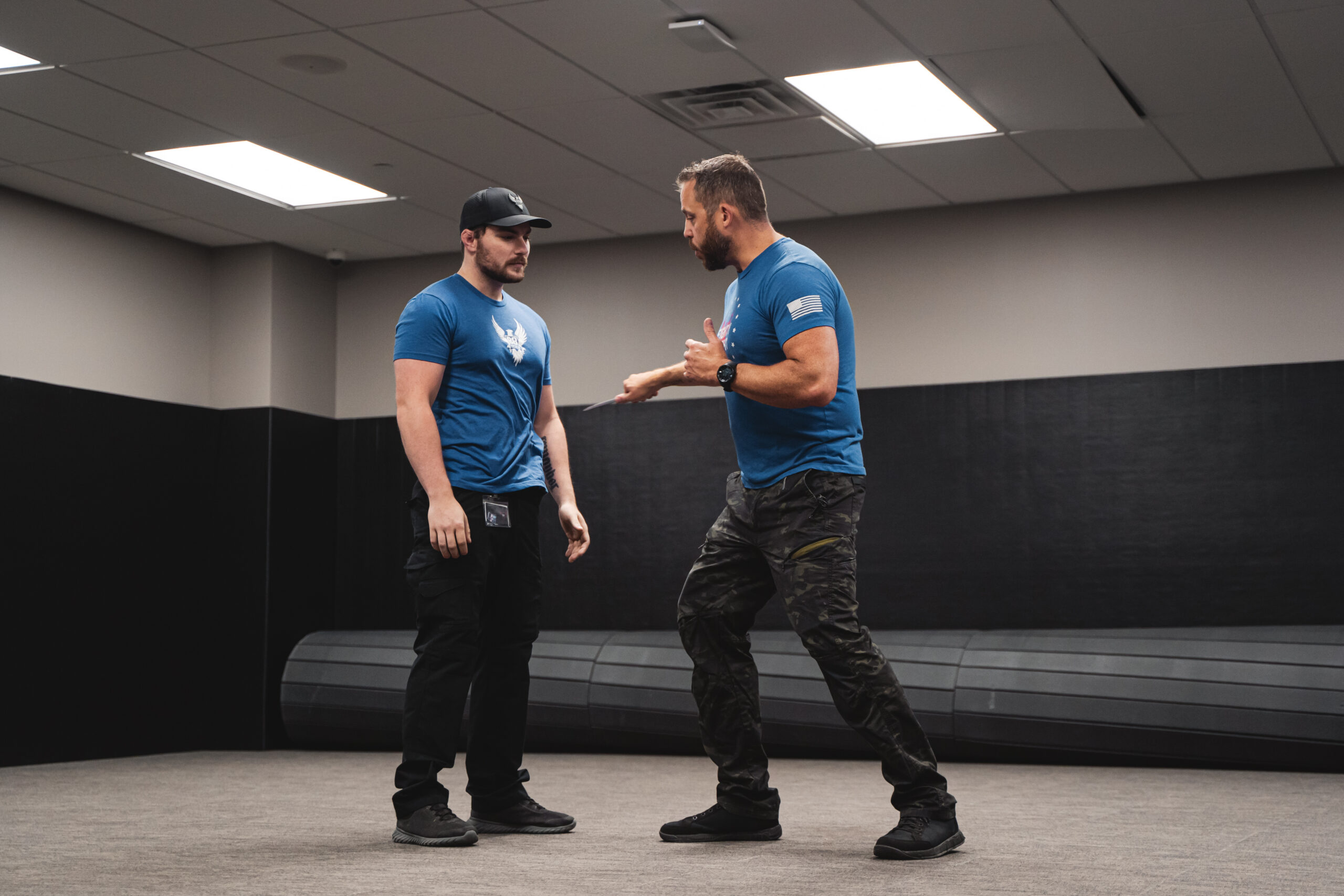
In my edged weapons classes, we teach that tools matter, but principles come first. Your knife should support your awareness, your readiness, and your ability to make sound decisions under stress — not replace them.
Below is a framework for choosing an EDC knife that aligns with those principles.
- Begin With Mindset, Not Metal
Before you consider blade steel, mechanisms, or carry style, ask a more important question:
“Why am I carrying a knife?”
In training, mindset is always listed first for a reason. Your beliefs, attitude, and intentions shape your tool choices. A knife is not a talisman, nor is it a substitute for situational awareness or avoidance. It’s a tool — sometimes a lifesaving tool — that exists within a larger personal protection system.
If your goal is:
- Utility: focus on ergonomics, durability, and daily use practicality.
- Emergency defense: prioritize deployability, secure grip, reliability, and legal compliance.
- Both: balance practicality with effectiveness under stress.
Your purpose drives your purchase.
- Understand the Legal Landscape
One of the first slides in our class reminds everyone: “Nebraska state law is not every state’s law.” Know your local statutes.
Many states distinguish:
- Blade length restrictions
- Fixed vs. folding knives
- Concealed vs. open carry
- Intent of use
- Age and prohibited-person limitations
For example, Nebraska defines certain knives over 3.5 inches as “deadly weapons” depending on use and intent. Laws differ everywhere — and ignorance is not a defense.
Before you buy, research your state and city laws, and consider how you plan to carry the knife daily.
- Knife Categories: Tactical, Utility, or Junk
In our class we break down knife options into three broad groups:
Utility Knives
These are designed for everyday tasks — opening boxes, cutting cordage, field work.
Pros: Practical, socially normal, legally safer, easy to use.
Cons: Not optimized for high-stress combative situations.
Tactical Knives
Built with defensive features in mind — secure grip, rapid deployment, durable steels.
Pros: More effective in emergency defensive use.
Cons: Often larger, may raise legal or social concerns, require training.
Junk Knives
Cheap, poorly made, unreliable.
Avoid them. When your safety or daily work relies on a tool, quality matters.
A high-quality utility knife may suit most people. Those serious about self-defense often choose a blend of both worlds.
- Key Features That Matter (and Why)
Based on the combatives principles you learn in class, here’s what to look for:
Blade Size and Shape
- For utility: 2.5–3” is typically ideal.
- For defensive potential: 3–3.5” with a point conducive to penetration.
Stay within your legal limits.
Deployment
Under stress, fine motor skills degrade. Look for:
- Assisted or manual flippers
- Thumb studs
- Reliable, repeatable deployment
Avoid overly complex mechanisms.
Grip and Ergonomics
You need a knife you can hold under:
- Sweat/humidity
- Cold
- Adrenaline
- Pressure
Textured handles, finger grooves, or materials like G10 help you maintain control.
Locking Mechanism
Your blade must stay open reliably. Quality liner-lock, frame-lock, or axis-style locks are all viable when well-made.
Steel Quality
Not all steels are created equal. Look for:
- Good edge retention
- Corrosion resistance
- Reasonable sharpening difficulty
Popular choices include VG-10, 154CM, S30V, and other reputable steels.
- Carry Method: Access Is Everything
One of the strongest principles we emphasize: If you can’t get to it, you can’t use it.
Consider:
- Strong-side pocket for speed
- Clip orientation (tip-up is most common for fast deployment)
- Whether you prefer visible carry (deterrence) or concealed (discretion)
- Clothing, workplace rules, and lifestyle
Your EDC knife should be accessible whether standing, seated, or under mild pressure.
- Integrate the Knife into Your System
An EDC knife is not an isolated thing — it’s part of your overall readiness and training.
Your principles apply here:
Attack the Attack
Don’t rely on a knife you can’t deploy under pressure.
Practice opening it from realistic positions.
Flow and Speed
Your knife should allow smooth, efficient movement.
Bulky or awkward designs slow you down.
Escape and Evade
Your knife is a tool to help you survive, not dominate.
Choose a knife that supports disengagement and mobility.
Situational Awareness
Carrying a knife requires heightened awareness of surroundings, legal implications, and the consequences of misuse.
- Get Training — and Keep Training
Owning a knife does not equal skill.
What we teach in our class:
- You must understand angles of attack and defense.
- You must train deployment under pressure.
- You must work from compromised positions (ground, wall, pinned).
- You must know when not to use the knife.
Carrying a blade is a responsibility. Training ensures you are prepared mentally, physically, and legally.
Final Thoughts
Choosing the right EDC knife isn’t about finding the coolest design — it’s about selecting a tool that aligns with your purpose, your environment, and your training.
Your everyday carry knife should:
- Support your mindset
- Comply with your local laws
- Be deployable under stress
- Fit your lifestyle
- Enhance your readiness
- Integrate with the defensive principles you learn in class
The knife is part of the system — but you are the most important component of that system.
AUTHOR: CHRIS LAPORTE
