What Every Responsible Gun Owner Needs to Consider Before Acting
Self-defense is more than marksmanship.
It is more than owning a firearm.
And it is certainly more than reacting in the moment.
Responsible self-defense requires judgment.
Before involving yourself in any violent altercation, you must weigh three critical factors:
- The legal implications
- The tactical implications
- The moral implications
At 88 Tactical, we believe that true preparedness goes far beyond the mechanics of shooting. It requires understanding the law, thinking strategically under stress, and being honest about what you are personally willing to risk.
Let’s break down what that really means.
Understanding the Legal Implications of Self-Defense
When people think about self-defense, they often focus on capability. But one of the most important questions is this:
Would my actions be legally justified under federal, state, and local law?
Self-defense laws vary significantly by state. Some states have Stand Your Ground laws. Others impose a duty to retreat. The definitions of “reasonable belief,” “imminent threat,” and “proportional force” can differ depending on where you live.
This is why concealed carry training and self-defense law education are critical for responsible gun owners.
We regularly see students in concealed carry classes who admit that before training, they had very little understanding of the legal standards surrounding use of force. Assumptions are common. Accurate knowledge is less so.
A Nebraska Example: Defense of a Third Party
Let’s look at a practical example based on Nebraska law.
Imagine you are inside a convenience store. A man enters and commits an armed robbery. He points a gun at the cashier. You are a legally armed citizen.
Would you be legally justified in using deadly force to defend the cashier?
Under Nebraska law, the use of deadly force in defense of a third party may be justified if certain conditions are met:
- You would be justified in defending yourself against the same threat.
In this scenario, a firearm pointed at a person constitutes a threat of death or serious bodily harm.
- The third party cannot retreat in complete safety.
Complete means exactly that. One hundred percent safe escape. If the cashier is trapped behind a counter with a gun pointed at them, safe retreat may not be possible.
- Compliance would not guarantee safety.
Handing over money does not guarantee survival. History shows that compliance does not always end violence.
If those elements are present, you may be legally justified.
But here is the key distinction:
Legally justified does not automatically mean tactically wise.
Tactical Considerations in a Self-Defense Situation
Just because you can act does not mean you must act.
Tactical decision-making requires asking difficult questions in real time:
- What is behind my target?
- Are there innocent bystanders in my line of fire?
- Is there more than one suspect?
- Can I safely disengage instead?
- Am I escalating a situation that may resolve without intervention?
In high-stress encounters, people tend to envision the best-case scenario. They picture clean draws, accurate shots, and immediate resolution.
Real life is rarely that predictable.
You Are Responsible for Every Round
Every round that leaves your firearm carries legal and civil responsibility.
Even if your initial use of force is legally justified, you could still face:
- Criminal investigation
- Temporary detention or arrest
- Civil lawsuits
- Emotional and psychological consequences
If an innocent bystander is injured during your engagement, you may face liability.
The reality is this:
There is no guarantee that you win a gunfight.
There is no guarantee that you walk away uninjured.
There is no guarantee that the situation unfolds the way you imagine.
Sometimes the most tactically sound decision is to secure your own safety, call 911, and be a good witness.
Preparedness is not just about skill. It is about restraint.
The Moral Implications of Self-Defense
Beyond the legal statutes and tactical variables lies something deeply personal:
Your moral framework.
Self-defense is widely viewed as a fundamental right. Some view it as a moral duty. But morality is individual.
You must ask yourself:
- Who am I willing to protect?
- What risks am I willing to accept?
- Would I risk my life for a stranger?
- Would I intervene for family?
- Would I be able to live with myself if I acted?
- Would I be able to live with myself if I did not?
There is no universal answer to these questions.
Some individuals feel a strong moral obligation to intervene on behalf of others. Others believe their responsibility extends primarily to their own family.
Neither decision should be made in the heat of the moment.
Because in a crisis, you will not rise to your ideals. You will default to your preparation and your convictions.
The time to think through your moral boundaries is before you ever face a real-world threat.
Why Scenario-Based Training Matters
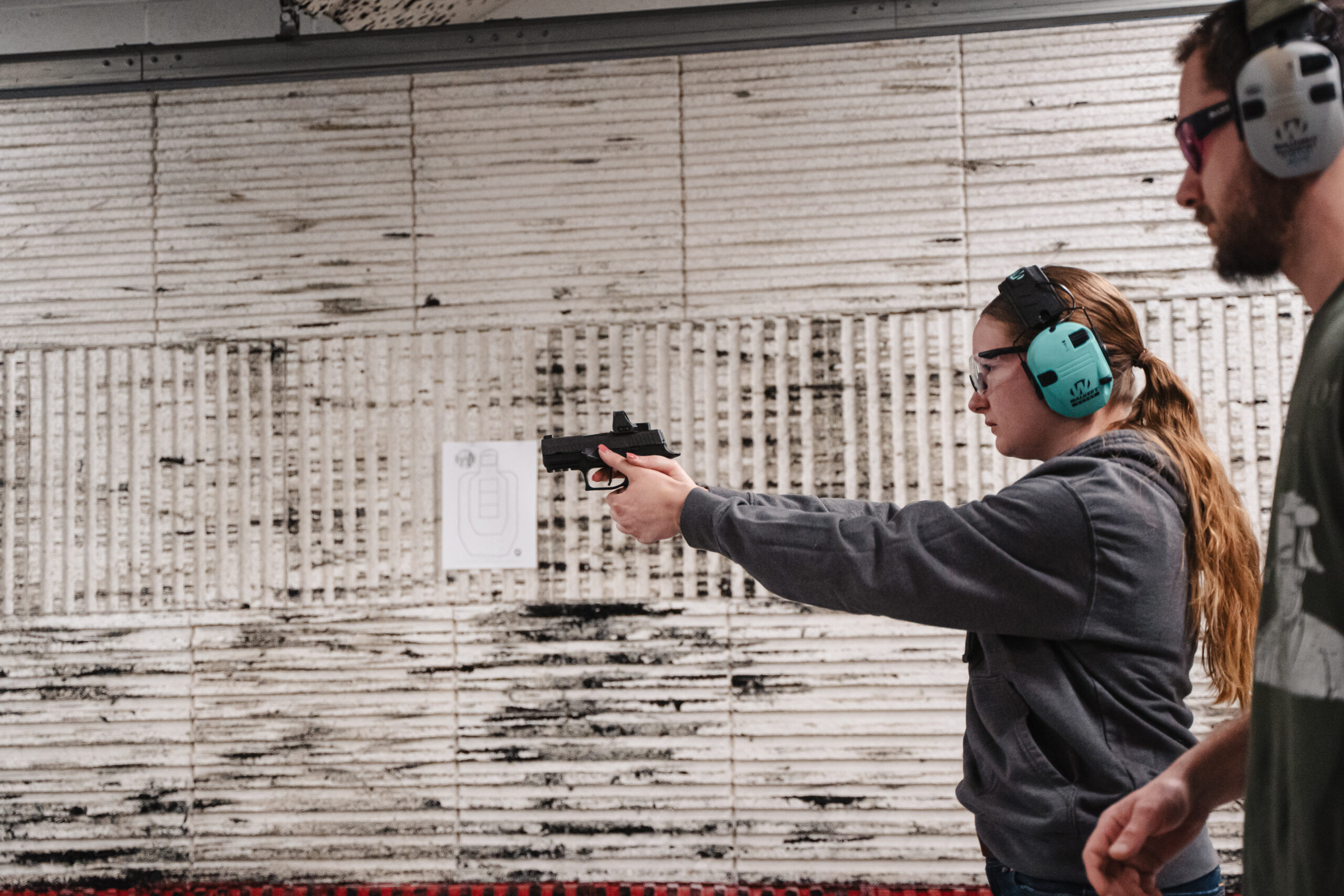
At 88 Tactical, this is one of the reasons why we include extensive scenario-based training that requires decision making.
Shooting skill alone is not enough.
In real life, you do not get a flashing sign that says “This is a justified shooting.” You get uncertainty. You get incomplete information. You get stress.
Scenario-based training forces students to:
- Process evolving threats
- Identify bystanders
- Make force decisions under pressure
- Decide when not to shoot
- Communicate effectively
- Think beyond the trigger press
We believe that responsible self-defense training must include judgment development, not just marksmanship drills.
Because in the real world, the hardest decision is often whether to act at all.
Responsible Gun Ownership Means Responsible Decision Making
Carrying a firearm is a serious responsibility.
It requires more than proficiency at the range. It requires:
- Knowledge of self-defense laws
- Tactical awareness and restraint
- Emotional maturity
- Moral clarity
Legal justification answers whether you may act.
Tactical analysis answers whether you should act.
Moral reflection answers whether you are willing to act.
All three matter.
Self-defense is not about ego. It is not about stepping into every problem. It is not about proving capability.
It is about protecting life while minimizing unnecessary risk.
Train Beyond the Trigger
If you are serious about personal protection, your training should go beyond basic shooting fundamentals.
You should be asking:
- Do I understand my state’s self-defense laws?
- Have I practiced making force decisions under stress?
- Have I thought through my moral boundaries?
- Am I prepared for the legal and emotional aftermath of a defensive encounter?
At 88 Tactical, our mission is to equip responsible citizens not only with skill, but with sound judgment.
Because when it comes to self-defense, the decision to act carries legal, tactical, and moral weight.
And that weight deserves thoughtful preparation.
Ready to Train Smarter?
If you are looking for comprehensive firearms training, concealed carry classes, and realistic scenario-based training that develops both skill and decision-making, explore upcoming classes at 88 Tactical.
Preparation is not just about being armed.
It is about being informed.
And it is about being ready to make the right decision when it matters most.
